The One-Object Walk: Let a Small Detail Set Your Route
A one-object walk turns a familiar route into a fresh outing: choose a detail, follow it at an easy pace and notice what your usual walk leaves out.
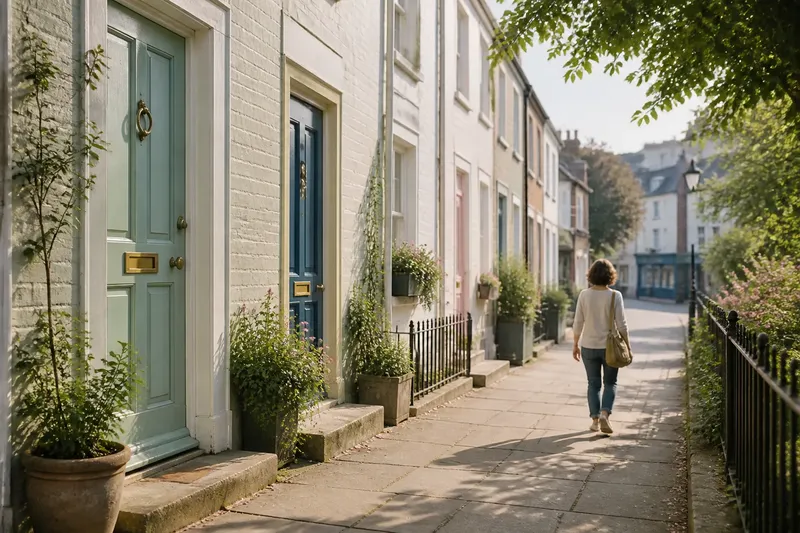
The usual shortcut can make a familiar walk feel like a task: down the same street, past the same gates, back before you have properly looked up. A one-object walk changes the route without requiring a map or a destination. Choose one everyday detail—doors, window boxes, drain covers—and let your attention follow it at an unhurried pace.
The point is not to collect sightings or cover ground. It is to give the walk a small, clear focus, then see what that focus brings into view. Three approaches work especially well: follow a detail that repeats, compare how one kind of object changes, or trace a detail through a particular setting. Each suits a different mood and a different sort of afternoon.
What makes an object a good guide?
Choose something visible often enough to keep your attention moving, but varied enough to reward a second look. Doors might differ in colour, handles, paint, glass or the way they sit back from the pavement. Window boxes may be full, sparse, newly planted or adapted to a shady sill. Even paving can lead your eye from a cracked slab to a careful repair.
Keep the object ordinary and easy to recognise. A rare landmark can turn the walk into a hunt for one answer; an everyday detail leaves room for surprise. Pick something you can observe safely from public paths. There is no need to enter a garden, peer through a window or photograph anyone’s home.
Set a light boundary before you start: a familiar neighbourhood, a short stretch of high street, or the park loop you already know. Then choose whether the detail will guide your pace, your turns or simply your attention. The route may change, but it should remain comfortable and straightforward to leave whenever you wish.
Should you follow repetitions or compare variations?
These approaches have different pleasures. Following repetitions is best when you want the walk to keep unfolding; comparing variations suits a slower outing with a more observant mood.
Follow repetitions for a wandering route
Choose a detail that appears in several places, such as door knockers, street trees or painted bollards. Each time you spot one, pause for a moment, notice one distinguishing feature and decide whether to continue in the same direction or take a nearby public path that offers another chance to see it.
This is not a rule that every sighting must dictate a turn. Let the detail influence the route rather than control it. If the next example is across a busy road or behind a gate, leave it alone and follow the pavement you are already on. A good object should make a walk more attentive, not more awkward.
Repetitions suit a day when you want gentle movement and an open-ended feel. They are especially useful on a street you know well, because familiar surroundings make small differences easier to notice. A line of front doors might reveal how one house has a bright new number, while another keeps a brass letter slot worn smooth by use.
Compare variations for a slower look
Choose one kind of object and stay on a compact route, comparing how it changes from one place to the next. With window boxes, you might notice plant shapes, containers, colour and how much light each sill receives. With gates, compare their outlines, materials and glimpses of the garden behind them without trying to look further in.
This approach fits a short walk or a quieter day when you would rather linger than cover distance. It can also make a familiar row of houses feel less like a repeated view. The variety is already there; comparison gives your eyes a reason to pick it out.
Say you choose door handles on a street you cross most days. At the first few doors, you notice polished metal; further along, a painted wooden handle catches your eye, then a simple pull set into a modern door. You keep to the pavement and turn at the corner you normally miss. The observable result is a route shaped by small contrasts, not a distant destination.
Can a setting give the detail a story?
A third option is to follow one object through a setting that already has a clear character: a row of shops, a park boundary or the edge of a canal path. Here the question is not only “What does this look like?” but “How does this detail change in this particular place?”
Look for a detail that belongs in more than one part of the setting. Shop signs might shift from hand-painted lettering to bright printed panels. Benches may face the path, a pond or a patch of shade. Along a park edge, notice where railings meet a gate, then where a low wall gives way to planting. The setting supplies a loose thread without demanding a formal route.
This option suits someone who likes a small narrative in a day out. It can be especially satisfying when the setting changes gradually: from busy shopfronts to quieter side streets, or from open grass to a wooded path. Avoid forcing a dramatic meaning onto what you see. A chipped sign is a chipped sign; the interesting detail may be its colour, placement or contrast with the newer signs nearby.
For a simple choice, ask what you want from the walk. Choose repetitions if you want the route to wander, variations if you want to linger and compare, or a setting if you want the details to add up to a gentle sense of place.
How do you keep the walk easy to follow?
A one-object walk needs just enough structure to stay enjoyable. Before setting off, settle on the detail and a broad boundary. A park loop, the streets around a familiar square or the way to a local shop and back can all provide a natural shape. There is no need to plot every turn.
At each sighting, take a short pause. Notice one feature, then move on when you are ready. If you like, use a quiet phrase to remember the observation: “blue door, worn step” or “new leaves, old wooden box”. This keeps the exercise in your head rather than turning the walk into a search for perfect notes.
Let comfort take priority over the theme. Cross roads where you normally would, keep to paths open to the public and skip any detail that would require trespassing or lingering somewhere uncomfortable. If the chosen object disappears, switch to a nearby detail or head home. A flexible exercise should be easy to put down.
One useful restraint: avoid checking your phone every time you spot something. Looking up is the whole pleasure. If you need a map for an unfamiliar area, check it while stationary and then return your attention to the walk.
Which one-object walk suits your day?
Use these questions to choose an approach without overplanning:
- Do you want your route to surprise you? Follow a repeating detail such as trees or doors.
- Would you rather slow down in one small area? Compare variations in window boxes, gates or paving.
- Are you drawn to the character of a particular place? Follow signs, benches or railings through a setting such as a park edge or shopping street.
- Is your attention already tired? Pick a broad, easy-to-spot detail and keep the route familiar.
These choices can overlap, but choose one as your main thread. If you start with doors, for instance, resist switching to every interesting object you pass. A little focus makes it easier to notice differences that would otherwise blur into scenery.
What should you notice beyond the object?
The detail can act as a doorway to the surroundings without becoming an excuse to inspect private spaces. Look at how light falls on a surface, whether a path slopes, or how a row of buildings opens towards a patch of sky. Listen for changes in the sound around you: a busier road, birds in a hedge, or footsteps on gravel. These observations keep the walk grounded in the place you are actually in.
Try noticing what changes as you move. A window box may look different from the other side of the street; a painted door might stand out only when the sun reaches the pavement. You do not need to decide what the detail means. Simply register what is visible and let the route continue.
When the walk is over, keep one small memory rather than a full account. It might be the unexpected colour of a gate, the neat repair in a stretch of paving or the point where a row of shop signs gave way to trees. The memory is yours to carry into the rest of the day, whether or not you share it with anyone.
What do people often ask about a one-object walk?
How long should a one-object walk take?
Let your available time and the route decide. A short loop can be enough to notice several versions of one detail, while a longer wander may suit a setting with more variety.
What if I cannot find the object I chose?
Switch to a nearby detail that is easy to spot, or finish the walk as planned. The exercise is a prompt for attention, not a scavenger hunt with a required result.
Can I do a one-object walk with someone else?
Yes. Choose the detail together, then take turns pointing out something the other person might have missed. Leave room for different observations instead of trying to agree on a single “best” one.
Do I need to take photographs or notes?
No. Looking and remembering are enough, though a brief note afterwards can help you keep a particular observation. Avoid photographing people or private homes without permission.
The next time your usual route feels too familiar, choose one ordinary detail before you leave. For a one-object walk, that is enough to make a known street feel newly readable: follow what catches your eye, keep the route comfortable and let the small differences set the pace.